Showing posts with label Red Scarf Girl. Show all posts

Thursday, May 15, 2014

Da Zi Baos, the cause of division between a nation

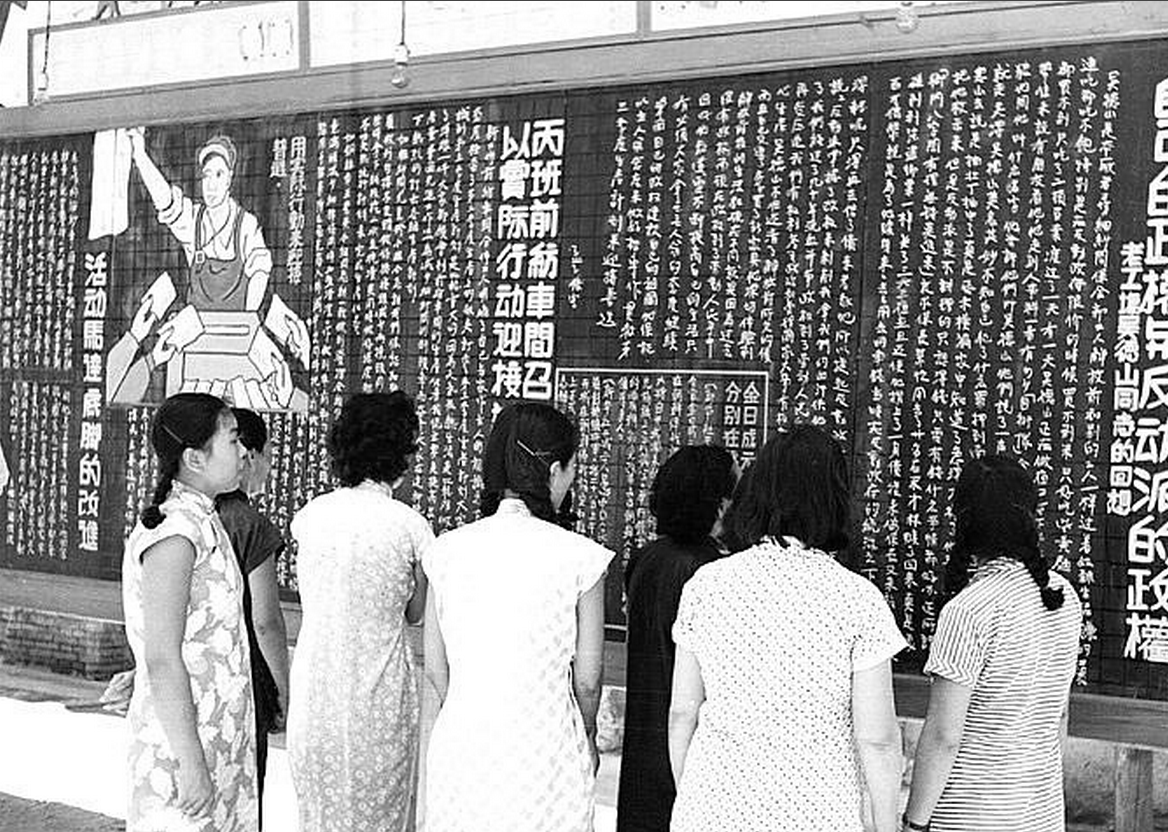
Da Zi Baos, were very common in China during the cultural revolution. They were a form of propaganda that Mao's followers used to humiliate "anti-revolutionaries" or to promote Mao. Da Zi Baos were often used in school environments. Ji-Li Jiang, the author of The Red Scarf Girl had to write them when she was in school in China. For a while, all classes were canceled and the students had to write Da Zi Baos all day. Many of them were about their teachers and how they had been wronged by them. Da Zi Baos were just another way to create a division between the revolutionaries, and the citizens with a bad class status.

Thursday, April 17, 2014

Red Scarf Girl Book Review

The Red Scarf Girl by Ji-Li Jiang is a memoir of the cultural revolution in China from 1966 to 1968. The book shows what life was like for a black family during this time in China. A black family in china is a family that has a socially unacceptable background, or was anti-revolutionary. Any actions done by the regular citizen that slowed or inconvenienced the red guards or a member of the communist party was viewed as being anti-revolutionary. Because of this, Black families were popping up everywhere.

Ji-li Jiang writes of a terrible time in the history of China. Everyone was brainwashed by Mao's greatness that the Chinese began to change the way they thought, dressed, acted and were educated, and if they didn't, they were marked as Four Olds and were humiliated in front of their family and friends by teen red guards. Four Olds are customs that are viewed as being from before the revolution. Mao's philosophy was in with the new, and out with the old. All of the customs that before the revolution were tossed out. Her family went from a success story to being blamed for a grandfather being a landlord which was considered the worst, their furniture and their cloths was taken. Also, their father was arrested and they were questioned as enemies. It was a sobering and scary story by a wonderful, bright, intelligent girl who chose to stand by her family and not renounce them. Ji-li Jiang was a brave young girl that had the power to protect her family.


The book was very well written. As a reader, I was really able to connect with Ji-Li Jiang and her struggles through this time in China. It was easy to understand how Ji-Li Jiang felt throughout the entire book. It really gave me a sense of what what the Chinese culture was like after the cultural revolution. However, the book stopped very abruptly, there were still a few loose ends that never got tied together. Despite this lack of a good ending, the book was an ok read. I would recommend it to anyone who is interested in this time in China.

Monday, April 7, 2014

Ai Weiwei Never Sorry Review


    The documentary, Ai Weiwei Never Sorry, directed by Alison Klayman, is about Ai Weiwei’s art and his influence on china. Ai Weiwei’s art reflects on the government and how they treat the regular citizen. The main purpose of the film is to show the true nature of the Chinese government. In 2011, Ai Weiwei was arrested for being so outspoken against the government. This documentary does an excellent job of showing the public response to Ai Weiwei’s arrest. “What can they do to me? none other than deportation, kidnapping and imprisonment, or make me completely vanish. @aww.”

Some themes that were in this documentary include hope, fear, censorship, and standing up for what you believe in. Hope is the driving force for Ai Weiwei. The only reason why he does what he does is because he believes that there is a chance for a better China. Another theme in the film is fear. Ai Weiwei is always living in fear. Ai Weiwei has to act brave even when he is afraid. He says “If you don’t act, the danger becomes stronger.” We also see fear in The Red Scarf Girl by Ji-Li Jiang. The Jiang family is living in constant fear of the red guards and being arrested. They deal with this fear in a very different way than Ai Weiwei. Ai Weiwei acts brave while the Jiang family has trouble sleeping. Another theme that we see in the documentary Ai Weiwei Never Sorry is censorship. The film shows how much the Chinese government censors the internet. The Chinese government blocks twitter and they withheld the names of all of the kids that died in the Sichuan earthquake. Ai Weiwei's name is one of the many things that China censors on the internet. "They all ask: Why? Why is it that this man’s name [Ai Weiwei] can never be typed on a Chinese computer or the whole sentence will disappear?"  The final, and most important theme in this film is stand up for what you believe in. Ai Weiwei stands up for what he believes in even though it endangers him. Ai Weiwei is also a very inspirational person. At the demolition of Ai Weiwei’s art studio, hundreds of people came, even though they put themselves in danger. "Citizens should bear the responsibility to act."

The quality of this film was phenomenal. As a viewer, I was able to relate it to real life. We hear lots of news from China these days, and the documentary on Ai Weiwei showed a first hand experience on what was going on in China. In many of Ai Weiwei’s art pieces, he is giving the middle finger. Ai Weiwei used this symbol to show his displeasure about the current Chinese government. The documentary uses the symbol and the meaning of the middle finger to great affect.  

This film was very interesting, It gave the viewers a real sense of what is going on in China today with all of the internet censorship.